Best Fire Station Alerting System for Large Metro Fire Departments (2026)
For a large metro fire department, the best fire station alerting system is the one you can put into dozens of stations without turning each one into a construction job, and that still wakes the right crew at 3 a.m. Our pick is EaseAlert®. It’s wireless, so a station can be set up in days, not weeks or months. It can also save significant cost compared with the labor costs to install hardwired systems, which need a cable run from every device back to a head-end unit.
- Category · Education
- ·ㅤPublished ·
- READ · 7 min
- ·ㅤCategory · Education
- ·ㅤPublished ·
The short version
- A large metro rollout means dozens of stations, and every one of them keeps running calls while the work happens.
- Hardwired systems need a home run of cable from each device to a head-end unit, and with traditional station alerting, a significant portion of the cost is in labor to run that wiring.
- EaseAlert® is our pick for large metro departments. It’s wireless, which makes it more flexible, more affordable, and faster to install.
- CAL FIRE selected EaseAlert® for all of its 295 Schedule B facilities for a reason: it’s the only system that could be installed at that scale in a reasonable timeline for an affordable cost.
What does a large metro department need from station alerting?
Every weakness in a station alerting system gets multiplied by your station count. These are the six things to check.
Fast installs across many stations
Forty stations means forty installs. The install method decides how long the program runs and how much of the budget goes to labor instead of equipment. Every station keeps answering calls while the work happens.
A dispatch link with a backup
Ask how CAD data reaches each station, and what happens to the alert when that link goes down.
Alerting by unit
A busy house might run an engine, a truck and a medic out of the same bay. If every tone wakes everybody, the crews who aren’t going lose sleep on every run. With move-ups and details, the alert also has to follow whoever is riding the rig that shift.
Turnout time
NFPA 1710 sets turnout targets of 80 seconds for fire and special operations calls and 60 seconds for EMS calls, measured at the 90th percentile. The clock starts at dispatch, before anyone’s boots hit the floor. We cover seven ways to cut it in How to Improve Fire Department Turnout Times.
Buy-in
In a big city, the union local, the dispatch center, city IT and procurement all get a say. And a system the crews don’t trust gets worked around, no matter who signed for it.
Firefighter health
Firefighters face up to 14 times the risk of death from heart disease during alarm response compared with routine station duties (Kales et al., New England Journal of Medicine, 2007). That figure covers the whole response, including the exertion and the drive. Ask: What is this new alerting system going to do for the health of my personnel?
How do fire station alerting systems compare for a large metro department?
Every serious vendor covers the basics: CAD integration, redundant alerting pathways, station displays, voice dispatch, zoned alerting, ramped lighting, ramped tones and a turnout timer. Where they differ is who the alert reaches first and what the install does to your buildings.
| System | Tactile pre‑alert | Modular setup | Wireless, purpose-built equipment |
|---|---|---|---|
| EaseAlert® | |||
| Bryx | |||
| Motorola | |||
| PURVIS | |||
| USDD | |||
| WestNet |
A check means the vendor publishes it. A cross means we didn’t find it published.
| System | Where the alert lands | Best for |
|---|---|---|
| EaseAlert® | The firefighter or unit on the call, plus the whole station when needed | Large departments that need to modernize stations fast, without hardwiring |
| Bryx | The station and its zones | A light install that uses commercial off-the-shelf equipment |
| Motorola Mach Alert | The station or bunkroom zone | Departments already standardized on Motorola radio and CAD |
| PURVIS FSAS | The station or zone | Departments that want hardwired station alerting |
| USDD Phoenix G2 | The station and its zones | Departments that want customization for a hardwired system |
| WestNet First‑In | Dorm Remotes set by apparatus | Departments that want many ways to activate an alert |
The other five, in brief:
- Bryx says over 2,000 public safety agencies use its mobile application, and it can turn a station’s existing compatible TVs into display boards.
- Motorola Mach Alert is the single-vendor path for departments already on Motorola radio, consoles and CAD.
- PURVIS names FDNY, the Boston Fire Department, the District of Columbia and LAFD among its clients, and cites 45-plus years in public safety.
- USDD Phoenix G2 comes from US Digital Designs, now a Honeywell brand, which says nearly 6,000 fire stations worldwide use its systems.
- WestNet First-In comes from a company in public safety communications since 1975, and it has ten ways to activate an alert.
For the full side-by-side, see our buyer’s guide.
Why is EaseAlert our pick for large metro departments?
EaseAlert® goes in without the cable work that makes hardwired rollouts slow and expensive. It also gets the right crew up, which matters most in your busiest houses.


TacPod

BunkAlert

Wireless ramp-up lighting
Wireless install
EaseAlert® is the first fully wireless station alerting system. Devices run off existing outlets or hardwired power. Each station gets its own Central Command Unit (CCU)™, which talks to that building’s devices over an encrypted wireless link. There’s no conduit and no wire pulls, so a station can be set up in days. Mission Fire Department in Texas put it in all six of its stations in four days. We walk through a wireless retrofit step by step in How to Upgrade Your Fire Station Alerting System Without Hardwiring or Renovation.
Lower install cost
With traditional station alerting, a significant portion of the cost is in labor to run wiring. EaseAlert® skips those runs, which can save significant cost compared with traditional hardwired systems.
Who’s using it
CAL FIRE selected EaseAlert to modernize alerting across 295 of its facilities in California, without the lengthy construction and hardwiring that station alerting has traditionally needed. Each facility will start with a base package, and because the system is modular, stations can add the rest later. Joint Base San Antonio, the 162nd Air National Guard and Mission Fire Department in Texas already run it. Here’s how Joint Base San Antonio’s fire chief describes it:
If you’re looking to gain an edge, improve health, and enhance overall capabilities, I strongly recommend EaseAlert. The system is universally praised by our firefighters and 911 dispatchers. I’ve heard nothing but positive feedback and the customer support has been excellent.
Fire Chief Michael Guzman
Joint Base San Antonio Fire & Emergency Services
Wakes the right crew
A tactile pre-alert reaches the firefighters on the dispatched unit, through a TacPod™ on the wrist or a BunkAlert™ at the bunk. With station alerting set to go by unit, the medic crew gets up and the engine crew stays asleep. Firefighters pick their unit on the Peripheral Command Unit (PCU) at the bunk, so someone detailed in for the shift can switch the bunk to the rig they’re riding.
Whole-station alerts
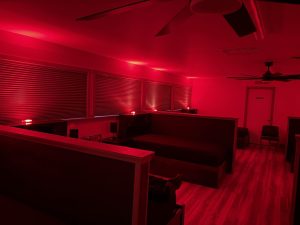
When everyone’s going, the EA Display Board puts the call on your station’s smart TVs, Automated Voice Dispatch reads it out, SafeTone™ ramps the tone and VizAlert™ red lighting climbs from dim to bright. A Turnout Timer, powered by VizAlert™, counts up from dispatch so the crew can see the clock.
Dispatch link and backup
CAD data arrives immediately through a real-time application programming interface, with relay contact closures in place for redundant alerting pathways. The 162nd Air National Guard replaced its station alerting with a fully integrated EaseAlert system, which also has a redundant radio path that runs straight into the local emergency communications center.
Patent and research
The pre-alert method is patented (US 11,109,213 B2, granted 2021). EaseAlert’s approach was clinically tested and validated with research funded by the National Institutes of Health (NIH) and led by the Center for Fire Rescue and EMS Health Research (CFREHR). Participants rated EaseAlert’s perceived health impact 66.7, against 24.8 for their traditional system, a 169% improvement (self-reported, n=34).
Device details are on the EaseAlert products page, and the capabilities page shows how the system is deployed in a station.


How much does fire station alerting cost for a large metro department?
Expect a seven-figure program for a full metro rollout.
| Budget line | Typical figure |
|---|---|
| Simple alerting retrofit, per station | $30,000 to $80,000 |
| Fully integrated build, per station | $50,000 to $200,000 |
| Full metro rollout, with multi-year project management, sustainment and equipment refreshes | Seven figures |
| Replacement cycle | Every 5 to 10 years |
Per-station cost usually falls as station count rises, because the dispatch-side work is a fixed cost spread across more buildings. EaseAlert® quotes each department on its own stations, and a free station assessment gets you a budget estimate for yours. For the full breakdown, read our guide to fire station alerting system cost.
How do large metro departments pay for station alerting?
Usually with a mix of these four.
- Capital budget. A new alerting system is a capital expense, budgeted the fiscal year before, once you’ve shown the budget committee the need. Support, maintenance and replacements come out of the operating budget.
- Grants and bonds. FEMA’s Assistance to Firefighters Grant program is the most common outside funding source for alerting, and its cycles and eligibility are posted on fema.gov. Public safety bonds and state emergency management grants turn up in these projects too.
- Cooperative contracts. They make a system easier to buy, which helps when the purchase has to clear a council vote. They don’t lower the price.
- A phased rollout. Roll out by battalion or by budget year. CAL FIRE’s plan is one model: every facility starts on a base package, and stations can add to it. Ask every vendor, in writing, whether adding stations later means replacing anything you already bought.
What should a large metro department ask before buying?
Ask these seven, and get every answer in writing.
- How long does each station take to install, how many can you do at once, and how do stations stay in service during the work?
- How does CAD data reach the station, and what’s the backup path when that link goes down?
- In our busiest house, on a single-unit call at 3 a.m., who wakes up?
- How does the alert follow a firefighter who’s detailed to another station for the shift?
- What will our city IT security review need from you, and how do you test coverage in our oldest stations?
- Which multi-station agencies run your system, and can we call them?
- What’s the study behind any health claim, and who paid for it?
For more, read 7 questions every fire chief should ask before buying fire station alerting.
See EaseAlert in your station
Free station assessment · No obligation
- Wireless install retrofits easily into existing stations and fits cleanly into new builds
- Alert the whole station, a zone, or the one crew that's going
- Integrates with your existing CAD and dispatch processes, so you don't have to change workflows
- Trusted by fire departments nationwide
Prefer to spec it out first? Build your system online.
Before you compare vendors
Walk into your oldest station and trace every home run a hardwired system would need. Then multiply by your station count. Is that the project you’d choose if you were starting from scratch today?
Frequently asked questions
What is the best fire station alerting system for a large metro fire department?
Our pick is EaseAlert®. It’s the first fully wireless station alerting system, so there’s no cable to run from each device back to a head-end unit. CAL FIRE selected it for 295 facilities across California.
How long does it take to install fire station alerting in a large department?
With EaseAlert®, a station can be set up in days, and Mission Fire Department in Texas put it in all six of its stations in four days. Hardwired systems take longer, because every device needs a home run of cable back to a head-end unit. The total for your department depends on how many stations you’re doing.
How much does fire station alerting cost for a large metro department?
Expect a seven-figure program. At metro scale it’s an enterprise project, with multi-year project management, sustainment and equipment refreshes. Per station, a simple alerting retrofit runs $30,000 to $80,000, and fully integrated builds run $50,000 to $200,000. EaseAlert® quotes each department on its own stations, and a free station assessment gets you a budget estimate.
Which large agencies use EaseAlert?
CAL FIRE selected EaseAlert® for 295 facilities across California. Joint Base San Antonio, the 162nd Air National Guard and Mission Fire Department in Texas already run it.
How does EaseAlert handle move-ups and details?
Firefighters select their unit on the EaseAlert® Peripheral Command Unit (PCU) at the bunk, so someone detailed in for the shift can switch the bunk to the rig they’re riding. The tactile pre-alert then reaches the responder who’s due, and the station side can still alert the whole house when everyone’s going.
Do we have to change our CAD or dispatch setup?
No. EaseAlert® integrates with your existing CAD and dispatch processes. CAD data arrives through a real-time application programming interface, with relay contact closures in place for redundant alerting pathways.
Related reading
- Fire Station Alerting System Cost: What Departments Actually Pay
- Best Fire Station Alerting Systems (2026 Buyer’s Guide)
- How to Upgrade Your Fire Station Alerting System Without Hardwiring or Renovation
- How to Improve Fire Department Turnout Times: 7 Methods
- 7 Questions Every Fire Chief Should Ask Before Buying Fire Station Alerting
References
EaseAlert. (2025). Mission TX Fire Department enhances safety and efficiency with EaseAlert FFAS installation. easealert.com
EaseAlert. (2026). CAL FIRE selects EaseAlert to modernize firefighter alerting across California. easealert.com
EaseAlert. (2026). Capabilities. easealert.com
EaseAlert. (2026). Client testimonials. easealert.com
EaseAlert. (2026). EaseAlert provides enterprise alerting system for 162nd Air National Guard. easealert.com
EaseAlert. (2026). Fire station alerting products. easealert.com
FEMA. (n.d.). Assistance to Firefighters Grant Program. fema.gov
Kales, S. N., Soteriades, E. S., Christophi, C. A., & Christiani, D. C. (2007). Emergency duties and deaths from heart disease among firefighters in the United States. New England Journal of Medicine, 356(12), 1207-1215. nejm.org
National Fire Protection Association. (n.d.). NFPA 1710: Standard for the organization and deployment of fire suppression operations, emergency medical operations, and special operations to the public by career fire departments. nfpa.org
Richardson, B., & Tonev, E. (2021). Pre-alert system for first responders (U.S. Patent No. 11,109,213 B2). U.S. Patent and Trademark Office. patents.google.com
Bryx. (2026). Bryx Station product and technical documentation. bryx.com
Motorola Solutions. (2026). Mach Alert fire station alerting. motorolasolutions.com
PURVIS Systems. (2026). PURVIS Fire Station Alerting System. purvis.com
US Digital Designs, a Honeywell brand. (2026). Phoenix G2 station alerting system. buildings.honeywell.com
Westnet Public Safety. (2026). First-In fire station alerting. westnetpublicsafety.com
More from the EaseAlert Blog