The Best Zetron Alternative: EaseAlert’s Fire Station Alerting System (2026)
Zetron built MAX Fire Station Alerting around the dispatch center and the station. EaseAlert® puts the firefighter first: a tactile pre-alert reaches the responder who’s due on a department-issued device, and the station side still runs displays, voice dispatch, and ramped tones and lights. If you’re weighing a Zetron alternative, the side-by-side and the switching steps are below.
- Category · Education
- ·ㅤPublished ·
- READ · 7 min
- ·ㅤCategory · Education
- ·ㅤPublished ·
The short version
- The biggest difference from Zetron is who gets the first alert. Zetron works out from the dispatch center to the station. EaseAlert® goes to the firefighter first.
- A tactile pre-alert reaches the responder who’s due on a department-issued TacPod™ or BunkAlert™, and the station side can alert by unit, so on a single-unit call the crew that isn’t going can stay asleep. When the whole house needs to go, it alerts the whole house.
- EaseAlert is a complete fire station alerting system on its own. CAD data arrives through a real-time application programming interface, with relay contact closures in place for redundant alerting pathways.
- Devices run off existing outlets or hardwired power, with no home-run wiring pulled through your walls.
- The pre-alert method is patented, and EaseAlert’s approach was clinically tested with research funded by the National Institutes of Health.
Why do departments look for Zetron alternatives?
Usually because of where the system is centered. Zetron designed MAX Fire Station Alerting from the dispatch side. If you’d rather design alerting from the bunk side, this comparison is for you.
It alerts the station. By Zetron’s own description, MAX Fire Station Alerting can alert single or multiple fire stations at once over VoIP, radio or both, sending alert tones and dispatch messages over the station’s public address system. That’s a station-first design, and it does what it was built to do. But even a zoned tone reaches every bunk in the zone. On a medical call at 3 a.m., only the medic crew is going.
It’s built around dispatch. Zetron calls the product “a purpose-built communications and operational automation solution,” deployable on its own or as a component of a full mission-critical communications platform. From the dispatch side it tracks apparatus status, turns station lights on and off, and opens and locks doors. If your dispatch center already runs Zetron consoles, that’s a real advantage. If the decision on your desk is about the firefighter in the bunk, the center of gravity sits somewhere else.
You may be weighing alerting as a health decision. Firefighters face up to 14 times the risk of death from heart disease during alarm response compared with routine station duties (Kales et al., New England Journal of Medicine, 2007). If that number shapes how you think about alerting, the question worth asking is who needs to hear the tone at all.
What is the best alternative to Zetron?
For departments that want the first alert to reach the firefighter, EaseAlert® is the alternative to call first. EaseAlert is pioneering the category of Firefighter Alerting, delivering tactile, visual and audible alerts to the individual responder as well as the whole station.

TacPod

BunkAlert

Wireless ramp-up lighting
The first alert goes to the firefighter. Traditional alerting starts with the station. EaseAlert® starts with the firefighter. A tactile pre-alert reaches the responder who’s due through a TacPod™ on the wrist or a BunkAlert™ at the bunk, ahead of EaseAlert’s own SafeTone™ station tone. With the station side set to alert by unit, the medic crew gets up and the engine crew stays asleep.
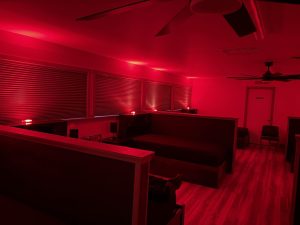
It covers the station side on its own. The EA Display Board puts the call nature, address and assigned crew on your station TVs, and Automated Voice Dispatch reads the call out. SafeTone™ ramps the station tone instead of hitting at full volume, VizAlert™ red lighting climbs from dim to bright, and the Turnout Timer counts up from dispatch. CAD data arrives immediately through a real-time application programming interface, with relay contact closures in place for redundant alerting pathways.
The devices are department-issued. TacPod™ and BunkAlert™ come from the department, and the Central Command Unit (CCU)™ reaches them over an encrypted wireless link. Firefighters set their unit assignment and BunkAlert™ vibration intensity right at the bunk on the Peripheral Command Unit.
It’s patented and clinically studied. The pre-alert method is patented (US 11,109,213 B2, granted 2021). EaseAlert’s approach was clinically tested and validated with research funded by the National Institutes of Health (NIH) and led by the Center for Fire Rescue and EMS Health Research (CFREHR). Participants rated EaseAlert’s perceived health impact 66.7, against 24.8 for their traditional system, a 169% improvement (self-reported, n=34), and 85% were satisfied or very satisfied (n=33).
If you’re looking to gain an edge, improve health, and enhance overall capabilities, I strongly recommend EaseAlert. The system is universally praised by our firefighters and 911 dispatchers. I’ve heard nothing but positive feedback and the customer support has been excellent.
Fire Chief Michael Guzman
Joint Base San Antonio Fire & Emergency Services
Full device specifications are on the EaseAlert products page, and the capabilities page covers how the system is deployed in a station.


How does EaseAlert compare to Zetron?
Both cover the core of station alerting: CAD integration, redundant alerting pathways, alert tones, voice announcements and station lighting. They differ in who gets the first alert, and you feel that in the first seconds of every call.
| Capability | EaseAlert® | Zetron MAX |
|---|---|---|
| Makes its own tactile wearable and bunk devices | ||
| Runs off existing outlets | ||
| Patented pre-alert |
Green = published by the vendor. Red = not published by the vendor.
| Compared on | EaseAlert® | Zetron MAX Fire Station Alerting |
|---|---|---|
| Who gets the first alert | The firefighter who’s due | The station: alert tones and dispatch messages over the PA, to one station or many |
| Personal alert | TacPod™ wearable and BunkAlert™ bunk device, both tactile | No Zetron-made wearable or bunk device published |
| Built around | The firefighter, with the station side covered | The dispatch center, standalone or as part of Zetron’s MAX platform |
| Install | Wireless; devices run off existing outlets or hardwired power | IP-based; integrates with a station’s existing Aux I/O infrastructure |
| Redundancy | Real-time CAD interface plus relay contact closures | Dual network connections and hot standby with automatic failover |
| Patent on the pre-alert method | US 11,109,213 B2 | None published |
| Clinical study of its alerting | Clinically tested with NIH-funded research | None published |
The row that matters at 3 a.m. is who gets the first alert: the building, or the firefighter who’s due.
Where Zetron is the stronger fit: if your dispatch center already runs MAX Dispatch and you want a single vendor for the radio side and the station side, that path is worth something. Weigh it honestly.
What does switching to EaseAlert involve?
A free station assessment, a CAD plan in writing, and a rollout you can take one station at a time.
Book a station assessment. An EaseAlert® solutions representative walks every station with you and scopes what each one needs, down to your dispatch setup. It’s free, with no obligation.
Confirm the CAD path. CAD data comes in through a real-time application programming interface, with relay contact closures as a redundant pathway. Name your CAD platform during the assessment and get the integration plan in writing.
List what Zetron does in your station today. If dispatch uses MAX to open bay doors, switch lights or watch alarm sensors, write each one down and get the plan for it in writing before cutover. Alerting is the headline. The automation is what crews miss on day one.
Roll out at your own pace. One station first, then more as budget allows.
Issue the devices. TacPod™ and BunkAlert™ are department-issued, so the first alert of every call lands on the department’s own hardware rather than a personal phone.
Building a shortlist? Put the seven questions every fire chief should ask before buying fire station alerting to every vendor you talk to.
What does EaseAlert cost?
There’s no single price list. EaseAlert® quotes each department on its own stations and needs.
Across the category, most departments budget $30,000 to $80,000 per station. In older buildings the biggest swing is installation. With traditional station alerting, a significant portion of the cost is in labor to run wiring. With EaseAlert, you save, thanks to a proprietary wireless design. A free station assessment gets you a budget estimate for your stations.
For everything that moves the number, read our guide to fire station alerting system cost.
See EaseAlert in your station
Free station assessment · No obligation
- Wireless install retrofits easily into existing stations and fits cleanly into new builds
- Alert the whole station, a zone, or the one crew that's going
- Integrates with your existing CAD and dispatch processes, so you don't have to change workflows
- Trusted by fire departments nationwide
Free assessment · Nationwide install and support
The bottom line
If you want the first alert of every call to reach the crew that’s going, look at EaseAlert® before you renew anything.
Zetron built a capable system around the dispatch center. EaseAlert built one around the firefighter, then covered the station too. Pull last month’s call log and count the single-unit runs that woke people who weren’t on the call. That count is the case for putting the firefighter first.
Frequently asked questions
What is the best alternative to Zetron?
For departments that want the first alert to reach the firefighter, our pick is EaseAlert®. It sends a tactile pre-alert through TacPod™ and BunkAlert™ devices to the responder on the call, and it covers the station with the EA Display Board, Automated Voice Dispatch, SafeTone™ ramped tones and VizAlert™ red lighting.
How is EaseAlert different from Zetron MAX Fire Station Alerting?
Zetron describes MAX Fire Station Alerting as a communications and operational automation solution that alerts fire stations from a central site over VoIP, radio or both. EaseAlert® puts the firefighter first: a tactile pre-alert reaches the responder ahead of EaseAlert’s own SafeTone™ station tone. EaseAlert’s pre-alert method is patented, and its approach was clinically tested with research funded by the National Institutes of Health.
Can EaseAlert replace Zetron for station alerting?
For alerting, yes. EaseAlert® is a complete fire station alerting system on its own. It takes CAD data through a real-time application programming interface, with relay contact closures in place for redundant alerting pathways, and it covers the station with displays, voice dispatch, ramped tones, red lighting and a turnout timer. If your Zetron setup also opens doors, switches lights or monitors alarm sensors, plan for each of those during the station assessment.
Can EaseAlert alert the whole station?
Yes. The EA Display Board pushes the call to your station TVs, Automated Voice Dispatch reads it out, the Turnout Timer counts up from dispatch, SafeTone™ ramps the audible tone and VizAlert™ ramps red lighting from dim to bright. What EaseAlert® adds is a tactile pre-alert that reaches the responder assigned to the call first. You get both layers and use the one the call calls for.
Can we switch from Zetron one station at a time?
Yes. EaseAlert® is modular, so you can add stations one at a time as budget allows. A free station assessment scopes each station and your CAD path.
How much does EaseAlert cost?
Each department gets its own quote from EaseAlert®, based on its stations and needs. Across the category, most departments budget $30,000 to $80,000 per station, and devices that run off existing outlets take conduit and home-run wiring off the job. A free station assessment gets you a budget estimate.
References
EaseAlert. (2026). Fire station alerting products. easealert.com
EaseAlert. (2026). Capabilities. easealert.com
EaseAlert. (2026). Client testimonials. easealert.com
Kales, S. N., Soteriades, E. S., Christophi, C. A., & Christiani, D. C. (2007). Emergency duties and deaths from heart disease among firefighters in the United States. New England Journal of Medicine, 356(12), 1207-1215. nejm.org
Richardson, B., & Tonev, E. (2021). Pre-alert system for first responders (U.S. Patent No. 11,109,213 B2). U.S. Patent and Trademark Office. patents.google.com
Zetron. (2020). Zetron launches new MAX Fire Station Alerting solution. zetron.com
Zetron. (n.d.). MAX Fire Station Alerting at-a-glance. zetron.com
Zetron details on this page come from Zetron’s own public website.
More from the EaseAlert Blog