“The real game changers will stem from technologies that have an impact on firefighter health and wellness.”
Rick Best, Program Manager, Everyone Goes Home
Rick Best knows firsthand the harsh realities of fighting fires. His experience within the fire service has provided numerous occasions to witness the dangers that come with the job, and the emotional toll it can take on the survivors.
He also knows that many of the deaths and injuries that occur while in the line of duty are preventable, provided one has the right education and know-how.

Rick Best, Program manager for Everyone Goes Home.
With over twenty years of experience in fire service training, public speaking, and program development, Rick is the program manager for Everyone Goes Home, which provides free training and educational programs focused on reducing deaths and injuries of firefighters in the line of duty.
But firefighters fight more than just fires. For many, the struggle lingers long after the flames are doused, and knowing when to ask for help can be a difficult hurdle to overcome.

Lea Wandling is a consultant for the First Responder Center for Excellence, a nonprofit organization that provides health and wellness education for firefighters, police officers, and other emergency service workers.
Lea understands the impact this work can have on the daily lives of first responders. Both organizations are affiliates of The National Fallen Firefighters Foundation, which is focused on honoring those who have fallen in the line of duty.
Despite their busy schedules, Rick and Lea made themselves available to sit and discuss the future of public safety, the role mental health plays in first response work, and their own experiences within the field of emergency service.
Why did you initially join your organization?
Rick was working at the fire department and the State Fire Marshal’s office when he asked to attend Courage to Be Safe® training.
Unfortunately, the person at the State Fire Academy said they were looking for chief officers, so Rick was denied. But, as Rick said, “If Mom says, ‘No’, ask Dad.” So, he talked to his fire chief, who sponsored him to go to the program. While he was there, Rick realized he needed to change his attitude and behavior if he wanted to excel. “I kind of drank the Kool-Aid if you will,” Rick said. The man who ran the program at the time, Steve Kimple, saw Rick’s potential and asked for his help. “And next thing, you know, I’m in the position I’m in now,” Rick said. Kimple officially passed the Program Manager torch to Rick in 2016.
Lea saw an open position to help get information out to all first responders, including law enforcement, fire, and EMS. At the college, she was the Dean of the School of Public Safety Services, and that says Lea, “put me in a position where I know enough to be a little bit dangerous.” Lea thought it seemed like a good opportunity to help see where she could get the information out and understand how the fire service related to the recruit classes and the students at the college. Says Lea, “…there’s so much that people don’t realize, and I just thought it was a good opportunity to kind of touch on all those areas and help where I could.”
Where do you like to travel outside of work?
While Rick enjoys taking cruises to the southern Caribbean and Curacao, Lea spends her summers at Lake Cumberland and going to Cozumel for the warm weather.
What advice would you give to a new first responder?
Lea feels it’s important to prepare students for the less pleasant aspects of life as a first responder. “I don’t think people realize how much bad they’re going to have to deal with,” Lea says. “I think people see what’s on TV and media, and they see the glamorous parts of the job or the fun parts of the job. And they don’t realize the other part that comes with it.”
Rick says he would break it down two ways. First off, he would tell new recruits to pay attention to the details. “That’s what’s going to separate a good firefighter from a great firefighter,” Rick says. The other piece involves mental health. Rick would tell them to find a person they can talk to and regularly check-in “instead of pushing it down inside because eventually, it’s going to come out.”
What changes do you foresee in public safety?
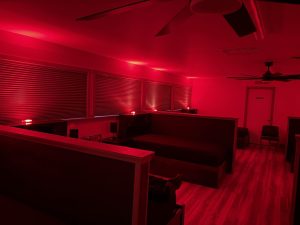
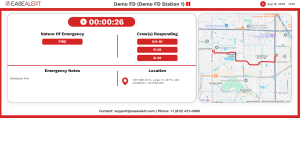
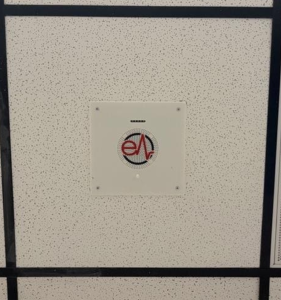
Rick feels the big changes involve research, data, and technology. “The real game-changers,” Rick says, “will stem from technologies that have an impact on firefighter health and wellness. EaseAlert’s ability to wake firefighters up while not impairing their cardiovascular health is a great example of one of those game-changers coming to the fire service.”
Lea says the recent and continual focus on mental health will be big. “A first responder is not going to be able to take care of other people if they’re not doing well.”
What do you think has contributed to the prevalence of mental health education and tools in recent years?
Rick says it’s because leaders had the courage to step up and say that it’s okay to not be okay. Being able to share that message has made it acceptable for others to admit they need help. The more that kind of communication occurs, the more the process is normalized. “Now it’s not such a daunting task for a younger firefighter to say, ‘I need help’,” says Rick, “because some of the older firefighters before them have said the same thing.”
Do you have a story you would like to share related to Stress First Aid?
Rick carries some baggage from his years in the fire service. As such, some days are worse than others. Something that has helped him time and again is Stress First Aid, a model for handling stress in work-related situations. But it’s not always the first thing that comes to mind when in the middle of an anxiety attack. There was one day when he was having some anxiety and venting about it. One of his co-workers noticed he was not using the Stress First Aid model and raised it to his attention. That gave him pause and allowed him time to work through it, calm down and gather his bearings.
The beauty of Stress First Aid, Rick says, is that it can be used for anyone, not just in the first response field. The most important thing is to be nice and reach out, just like his co-worker did. “It’s like the airport,” Rick says. “See something, say something.”
For additional information on Stress First Aid visit First Responder Center For Excellence to request an online or in-person training.
National Fallen Firefighters Foundation