The first documented system of fire alerting goes back to 1658. [1] Firefighters would patrol the city streets armed with buckets and ladders, searching for the telltale signs of fire. Should they happen upon a fire, they would ring their bells and shout warnings to the local community.

It was a woefully inefficient system, but it was the most effective alerting method of the time. Fortunately, improvements were made towards the 1800s when a series of bell towers, or fire towers, were strategically placed around a city’s neighborhoods that could warn the surrounding community should a fire break out.

The History of Emergency Alerting
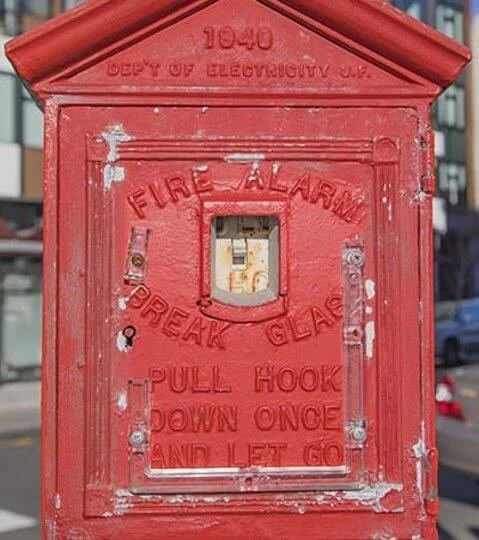
Photo Credit: Total Fire Protection

The arrival of the telegraph during the 1850s allowed for a slightly more advanced fire alerting system. Two alarm boxes with telegraph keys were connected via a telegraph cable. One box is kept in the central alarm station, and the other is placed somewhere easily accessible out in the neighborhood.

Alerting the station was a two-person job, with one operating the crank handle to generate the electricity for the signal while the other operator would use the telegraph key to rapidly tap out a morse-coded message detailing the location of the fire. A telegrapher at the central station would then relay the address to the fire department.

Technology kept advancing, and our first electric fire alarm system went into widespread use before the turn of the 20th century. [2] This new style of fire alerting system was the first to use a thermostat as a trigger to power an alarm bell and set sprinklers off to help contain the fire. It was primitive by today’s standards but still a step in the right direction.


References:

  1. History and technology of the fire alarm system. Ryan Fire Protection. (2017, November 1). Retrieved June 23, 2022, from https://www.ryanfp.com/fire-alarm-system-history-technology/

  2. Werner, C. (2015, January 1). Technology supplement: CAD and the Fire Service | Firehouse. Firehouse.com. Retrieved May 3, 2022, from https://www.firehouse.com/tech-comm/cad-dispatch-systems/article/12024459/fire-service-technology

Resourcesㅤ/
Advancing the Alert (Pt. 1)
Research

Advancing the Alert (Pt. 1)

The evolution of fire service dispatch began in the seventeenth century with manual street patrols, bells, and neighborhood watchtowers. This layout transformed during the nineteenth century with the implementation of telegraph boxes and the eventual development of early automated electric alarm bells and sprinklers. These historical milestones established the foundation for modern notification networks, shifting the industry from primitive community warnings toward structured emergency dispatch protocols.

The first documented system of fire alerting goes back to 1658. [1] Firefighters would patrol the city streets armed with buckets and ladders, searching for the telltale signs of fire. Should they happen upon a fire, they would ring their bells and shout warnings to the local community.

It was a woefully inefficient system, but it was the most effective alerting method of the time. Fortunately, improvements were made towards the 1800s when a series of bell towers, or fire towers, were strategically placed around a city’s neighborhoods that could warn the surrounding community should a fire break out.

The History of Emergency Alerting

Photo Credit: Total Fire Protection

The arrival of the telegraph during the 1850s allowed for a slightly more advanced fire alerting system. Two alarm boxes with telegraph keys were connected via a telegraph cable. One box is kept in the central alarm station, and the other is placed somewhere easily accessible out in the neighborhood.

Alerting the station was a two-person job, with one operating the crank handle to generate the electricity for the signal while the other operator would use the telegraph key to rapidly tap out a morse-coded message detailing the location of the fire. A telegrapher at the central station would then relay the address to the fire department.

Technology kept advancing, and our first electric fire alarm system went into widespread use before the turn of the 20th century. [2] This new style of fire alerting system was the first to use a thermostat as a trigger to power an alarm bell and set sprinklers off to help contain the fire. It was primitive by today’s standards but still a step in the right direction.

Reference

  1. History and technology of the fire alarm system. Ryan Fire Protection. (2017, November 1). Retrieved June 23, 2022, from https://www.ryanfp.com/fire-alarm-system-history-technology/
  2. Werner, C. (2015, January 1). Technology supplement: CAD and the Fire Service | Firehouse. Firehouse.com. Retrieved May 3, 2022, from https://www.firehouse.com/tech-comm/cad-dispatch-systems/article/12024459/fire-service-technology
In this article
(Click a chapter to jump below.)

Leave a Reply

Your email address will not be published. Required fields are marked *